
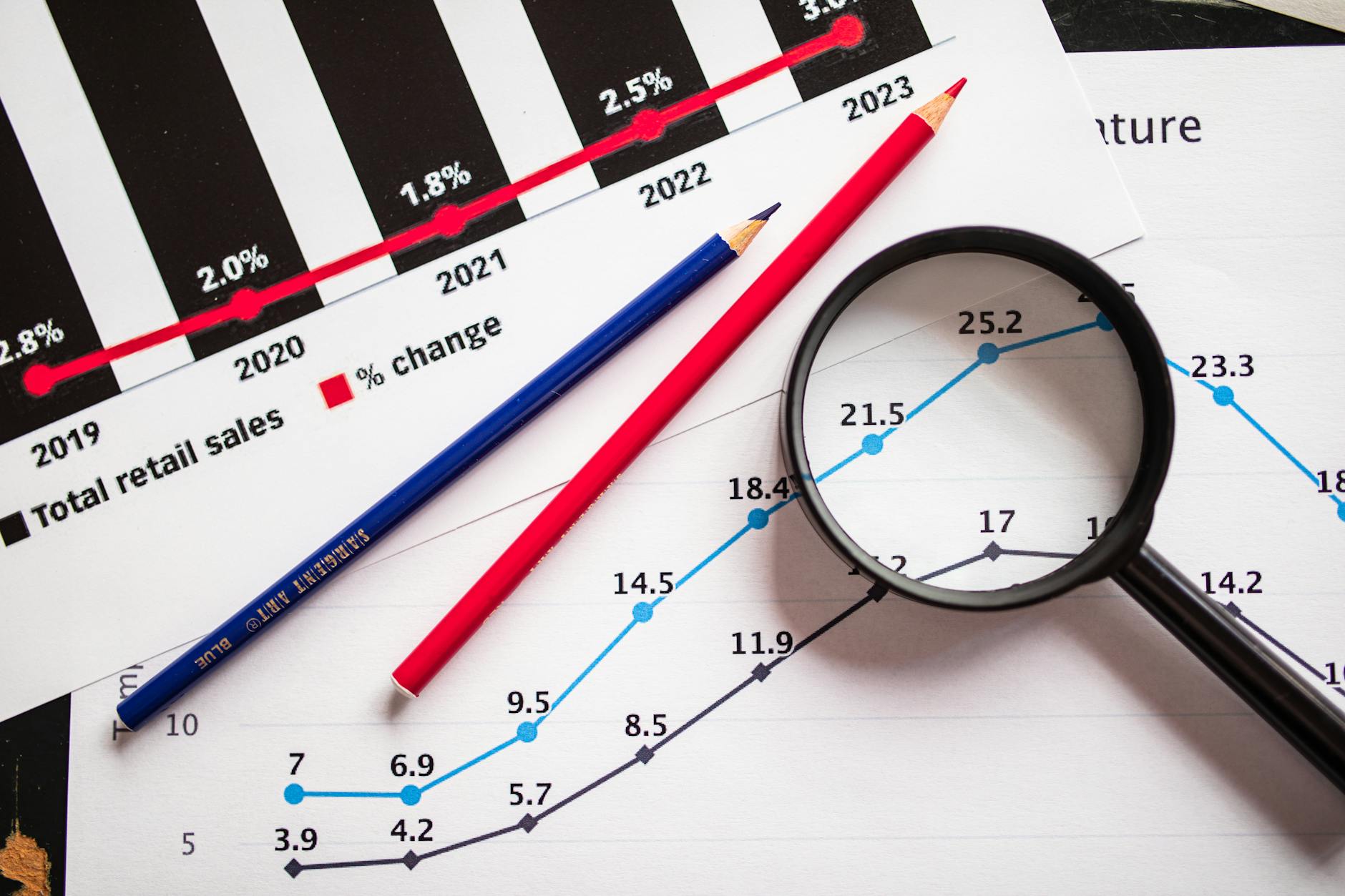
Forecasting is supposed to be one of the most valuable things a finance team does.
It drives decisions.
Guides strategy.
Shapes how companies invest, hire, and grow.
And yet—most forecasts are… not very good.
They’re outdated almost as soon as they’re created. They rely on messy data. And in many cases, they’re influenced more by internal politics than actual reality.
If you’ve ever built a forecast that didn’t match what actually happened, you’re not alone.
The problem isn’t a lack of effort.
It’s a broken process.
Let’s break down where forecasting goes wrong—and how to fix it.
The Real Problem: Forecasting Isn’t Built for Today’s Environment
Most finance teams are still using forecasting processes designed for a different era.
Back when:
- Data was smaller and easier to manage
- Reporting was monthly (not real-time)
- Fewer systems were involved
But today:
- Data lives in multiple systems
- Business conditions change quickly
- Leaders expect faster, more accurate insights
The old approach hasn’t kept up.
So teams end up forcing modern problems into outdated workflows.
Where Forecasting Breaks Down
1. Data Is Scattered and Inconsistent
This is the most common issue—and the most damaging.
Finance teams often pull data from:
- ERP systems
- CRM platforms
- Spreadsheets
- Manual inputs from different departments
The result?
- Conflicting numbers
- Time spent reconciling instead of analyzing
- Lack of trust in the final forecast
If your inputs aren’t reliable, your forecast won’t be either.
2. Everything Lives in Excel (And It’s Breaking)
Excel is powerful—but it has limits.
When forecasting models become:
- Too large
- Too complex
- Too dependent on manual updates
Things start to break.
You get:
- Version control issues
- Broken formulas
- Hidden errors
- Long update cycles
At that point, Excel isn’t enabling forecasting—it’s slowing it down.
3. Forecasting Is Too Infrequent
Many teams still rely on:
- Annual budgets
- Quarterly forecasts
But in a fast-moving business, that’s not enough.
By the time a forecast is finalized:
- Assumptions have changed
- Market conditions have shifted
- The business has moved on
So the forecast becomes a static document instead of a decision-making tool.
4. There’s No Clear Ownership
Forecasting often sits in a gray area:
- Finance owns the model
- Operations owns the inputs
- Leadership owns the expectations
When no one truly owns the full process, you get:
- Delays
- Misalignment
- Finger-pointing when things go wrong
And ultimately, a weaker forecast.
5. Politics Get in the Way
This one doesn’t get talked about enough.
Sometimes forecasts aren’t just about predicting the future—they’re about influencing perception.
- Departments may sandbag numbers
- Leaders may push for optimistic projections
- Assumptions get adjusted to “tell a better story”
At that point, the forecast stops being objective.
And that’s a serious problem.
How to Fix Forecasting (Without Overcomplicating It)
You don’t need a complete overhaul overnight.
But you do need to modernize your approach.
Here’s where to start:
1. Centralize Your Data
Before you improve your forecast, fix your inputs.
That means:
- Creating a single source of truth
- Reducing manual data pulls
- Standardizing definitions across systems
This doesn’t have to be perfect—but it has to be consistent.
Because forecasting should be about analyzing data, not chasing it.
2. Move Toward Rolling Forecasts
Instead of forecasting once per quarter, shift to a rolling approach.
Example:
- Always forecast the next 3–6 months
- Update regularly (monthly or even weekly)
This allows you to:
- Adjust quickly to new information
- Keep forecasts relevant
- Make better short-term decisions
It turns forecasting into a living process—not a static exercise.
3. Use the Right Tools for the Job
Excel still has a place—but it shouldn’t carry the entire load.
Consider layering in tools that:
- Handle larger datasets
- Automate updates
- Provide real-time visibility
Business intelligence platforms (like Power BI) can:
- Connect to multiple data sources
- Eliminate manual reporting
- Visualize trends clearly
This reduces errors—and frees up time for actual analysis.
4. Simplify the Model
More complexity doesn’t equal more accuracy.
In fact, overly complex models often:
- Hide assumptions
- Increase the risk of errors
- Slow down updates
A better approach:
- Focus on key drivers
- Limit unnecessary detail
- Make assumptions transparent
A simple, well-maintained model will outperform a complex, fragile one every time.
5. Separate Forecasting from Politics
This is easier said than done—but it’s critical.
Start by:
- Defining clear assumptions
- Documenting changes
- Creating visibility into how numbers are built
The goal is to make forecasting:
- Transparent
- Data-driven
- Less influenced by bias
Because a “comfortable” forecast is not the same as an accurate one.
What Good Forecasting Actually Looks Like
When forecasting is working well, you’ll notice a few things:
- Data is trusted and consistent
- Updates happen quickly and regularly
- Assumptions are clear and documented
- Leaders actually use the forecast to make decisions
And most importantly:
The forecast improves over time.
It’s not about being perfect—it’s about getting better.
Most finance teams don’t have a forecasting problem.
They have a process problem.
Fix the data.
Modernize the tools.
Simplify the model.
Update more frequently.
Do that, and forecasting becomes what it was always meant to be:
A tool for better decisions—not just another report.
Because at the end of the day, the goal isn’t to predict the future perfectly.
It’s to be prepared for it.


Leave a Reply